
On August 4, 2020, a massive explosion occurred in Beirut, Lebanon. It was caused by a fire at the port that reached a warehouse containing 2,750 tonnes of ammonium nitrate. The force of the explosion destroyed several city blocks.
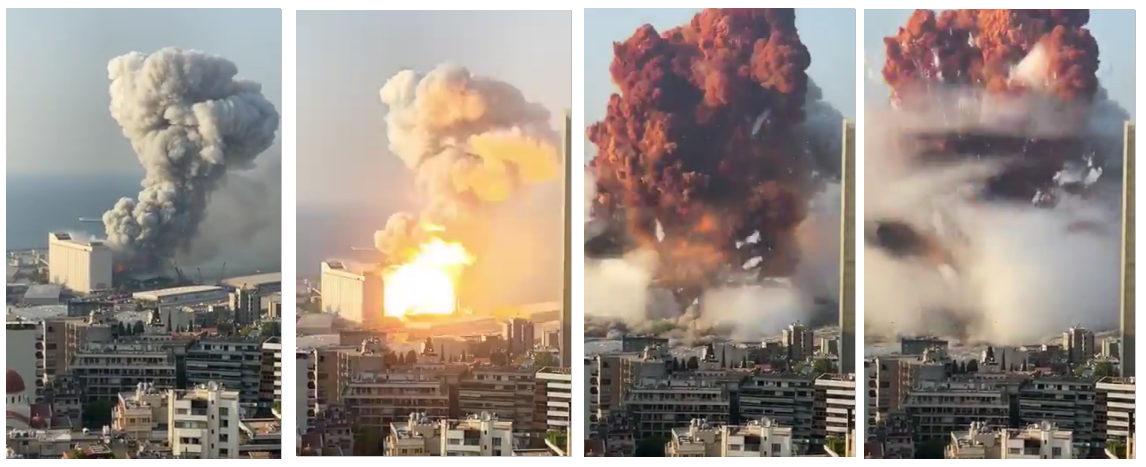
Figure 1. Sequence of the Beirut explosion viewed from a distance.

Figure 2. View of the area most affected by the August 4, 2020, explosion.
The explosion generated seismic waves, including surface waves, recorded by nearby seismographs. Figure 3, from @ALomaxNet, shows a record from a station approximately 70 km south of Beirut in Fortifications Givat HaEm, Israel.
The records resemble those of a conventional earthquake, with apparent P- and S-wave arrivals. However, the traces probably reflect the two stages of the explosion. Figure 1 shows an initial blast followed seconds later by a much more powerful one. The larger arrivals in Figure 3 may correspond to the second blast.
The Jordan Seismological Observatory estimated that the energy released was equivalent to that of a magnitude 4.5 earthquake, or approximately 83 tonnes of TNT.
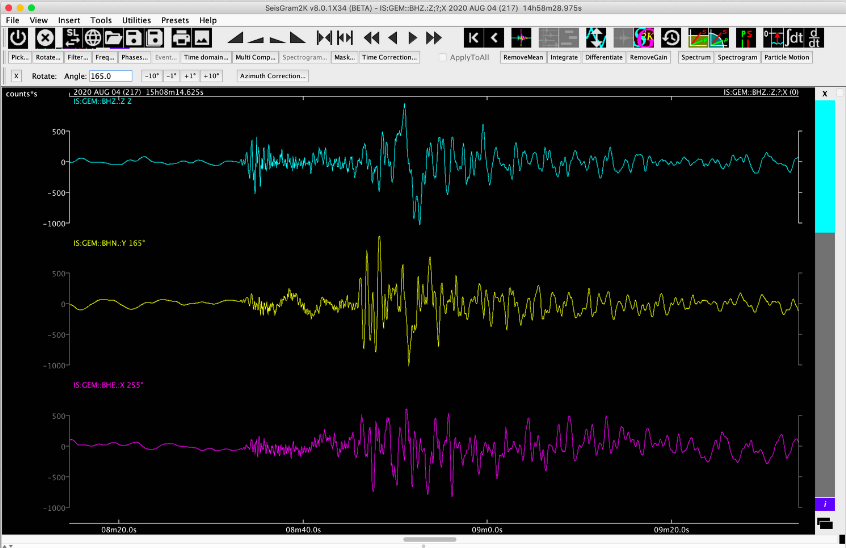
Figure 3. Seismic traces from the explosion.
The following image shows vertical-component waveforms recorded by several seismographs in Israel (courtesy of @NadavWetzler).
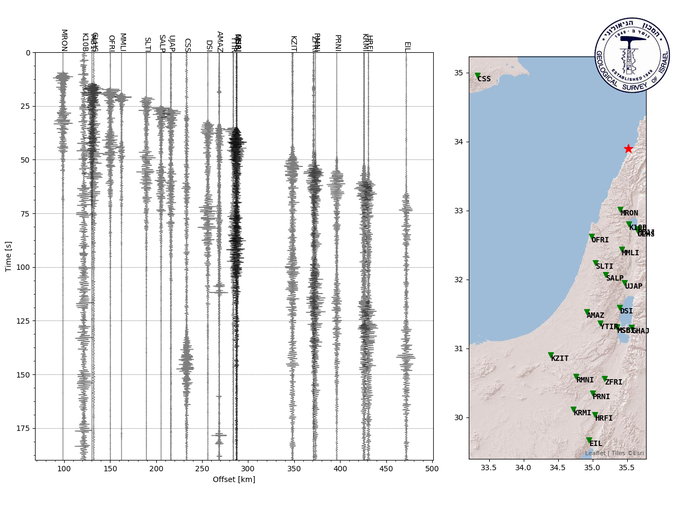
Figure 4. Seismic records from Israel.
The blast produced a shock wave that became visible because of debris, dust, moisture, and other material in the air. This is a pressure wave traveling faster than the speed of sound. One characteristic is that the sudden pressure increase is perceived as a blast (Wikipedia).
The next figure shows the shock wave expanding outward from the blast site. The photographs were taken from approximately 10 km away.
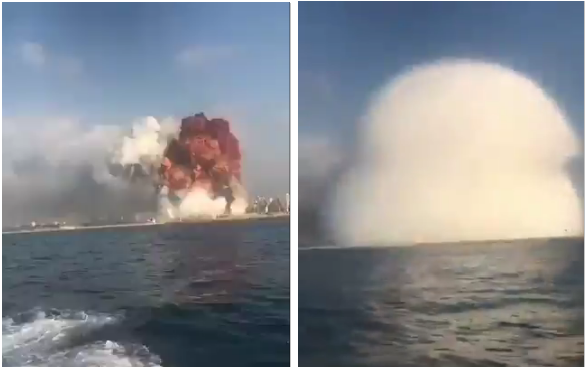
Figure 5. Shock wave (white cloud at right).
The following video is a 22-second clip showing the arrival of seismic waves generated by the explosion during a church service. Moments later, the air shock wave reaches the building and shatters the windows. The service was being broadcast online because of COVID-19 emergency restrictions.
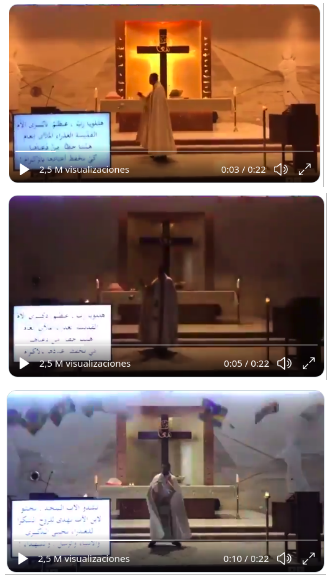
Figure 6. Image sequence showing the shock wave reaching Saint Maron Church in Beirut.
At 0:03 in the video, the seismic waves generated by the explosion arrive. These were probably surface waves with an average speed of about 3 km/s, suggesting the explosion occurred around 0:01–0:02 in the recording. At 0:05, electricity fails and the church goes dark. When the shock wave arrives at approximately 0:10, it shatters the windows with a very loud noise.
Seismic and sound waves originated at the same instant. Their different arrival times can be used to estimate the distance from the church to the explosion. According to the sequence in Figure 6, the interval between the seismic arrival and the shock wave is approximately 7–8 seconds. Using a sound speed of about 343 m/s and multiplying by 7–8 seconds gives an estimated distance of 2.4–2.7 km. Figure 7 places the actual distance at approximately 3.0 km.
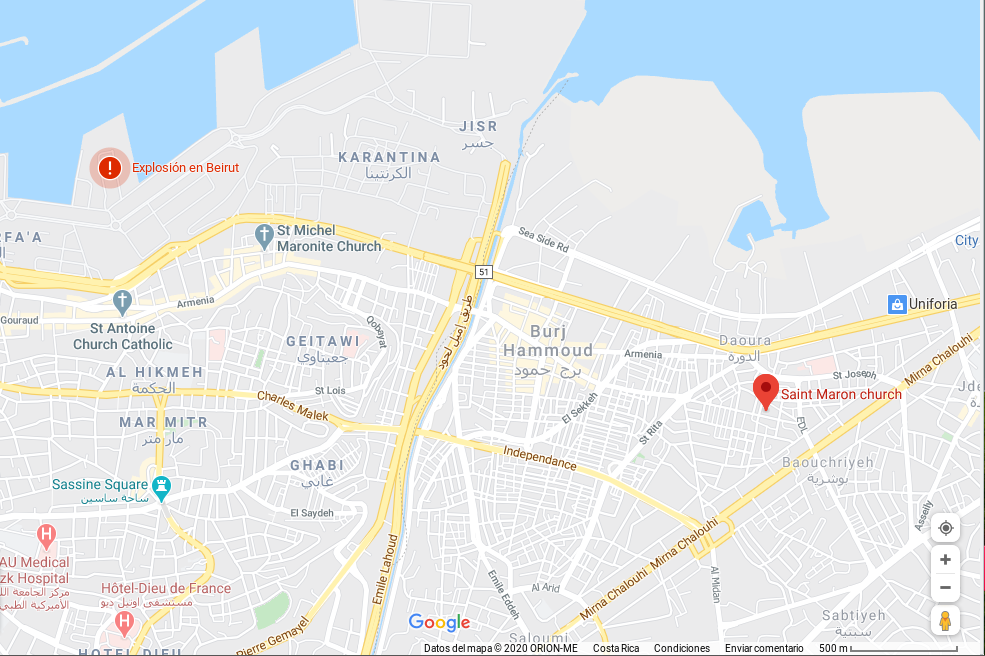
Figure 7. Location of the explosion at Beirut's port and Saint Maron Church.