
An intraplate earthquake occurs within a tectonic plate as a result of local faulting. In Costa Rica, this generally refers to earthquakes occurring away from the subduction zone or the Panama Fracture Zone in the southern region. The 1910 Cartago, 1990 Alajuela, 2009 Cinchona, and 2016 Upala earthquakes are intraplate events because they originated on local faults within the Caribbean Plate, where Costa Rica lies.
The following images also show intraplate earthquake examples in specific settings on either side of the subduction zone.
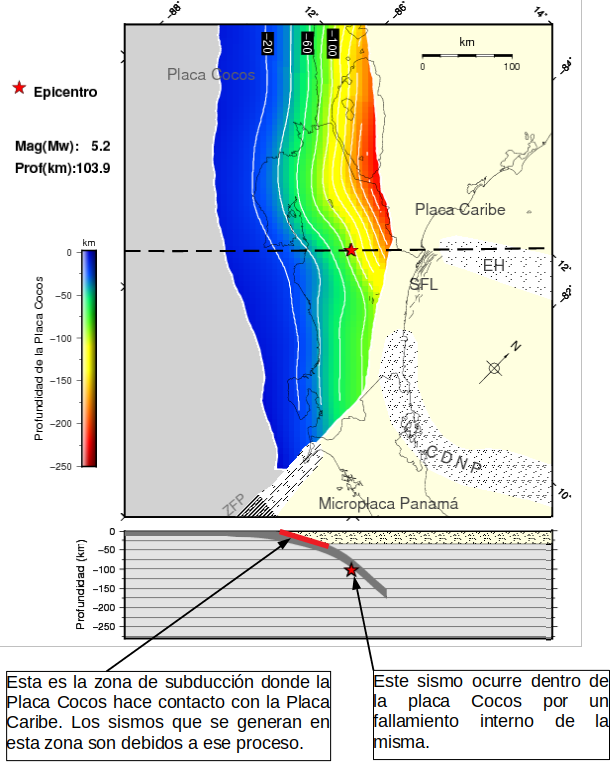
Figure 1. An intraplate earthquake originating within the Cocos Plate beneath the subduction zone. Deep events of this type can be readily felt at the surface when their magnitude is moderate, as with the M5.2 earthquake of August 6, 2019.

Figure 2. An intraplate earthquake within the Caribbean Plate. This M5.0 event occurred on July 28, 2019, at a depth of 10 km. Despite its magnitude, shaking was not strongly felt by people at more distant sites, unlike the situation shown in Figure 1.

Figure 3. A shallow, low-magnitude intraplate earthquake within the Cocos Plate on July 6, 2019.